










By Elizabeth Tucker-- Sleepy Hollow native Madeleine Dopico launched her psychotherapy practice, Two Point Oh Therapy, last month. With an...
Read More
In Scenic, Serene Coastal Maine, Murder Lurks Beneath The Surface

 • Bookmarks: 751

October 12, 2025
By Barrett Seaman—
Jeanette King is a middle-aged divorcee, barely making a living shucking crabs on a 28-mile-long island off the coast of Maine. Her ex-husband is a lobsterman who has gotten caught up in a highly lucrative but deadly trade in baby eels, or elvers. They are also called glass eels, because in their earliest stage of life they are almost translucent. Hence the title of this intense tale of corruption, murder and chicanery. Jeanette’s curiosity, bolstered by her personal courage, leads her and a few allies on a trail that eventually solves a series of gruesome murders and exposes an international smuggling network
In The Glass Eel, father and son authors Jack and Josh Viertel pull back the veneer created by graceful, weather-beaten cottages occupied by well-to-do “summer people” to reveal a world in which most folks struggle to put food on the table, while others engage in an international black market that ships tank loads of tiny elvers off to Korea where they are raised to become sushi. Through this world pass corrupt politicians, Native Americans fighting to preserve their sovereignty, grifters and violent men.
Support our Sponsors
Jack and Linda Viertel have been summering in Maine for two decades and have owned their own place there for 14 years. A resident of Gracemere in Tarrytown, Jack spent a career as an artistic director and producer of Broadway musicals. He has written two earlier books, including a novel, Broadway Melody, featured in The Hudson Independent (https://thehudsonindependent.com/a-fictional-tip-of-the-hat-to-broadways-glory-days/).
Josh allows that he has always been drawn to food, farms and fishing—and has made a career out of it. He took a year off from college to herd sheep in Sicily, pick lemons, hoe grapes and plant vegetables At Yale University, he launched the Yale Sustainable Food Program, with its own working farm on campus and curriculum around food and farming. He ran a large non-profit called Slow Food USA and is now building a hospitality and retreat venue 90 minutes north of New York City, with 42 cabins perched above a river.
Recently, the father and son team took time to answer questions posed by The Hudson Independent:
Whose idea was it to focus on the black market in elvers?
Jack: I’ve been a lifelong fan of thrillers and mysteries from Raymond Chandler to Carl Hiaasen and back again, but this was Josh’s idea from the start, because he knew the history of the black-market elver trade (elver is another word for glass eels) in Maine and about the elver wars which happened in the 2010s. But he saw it as a TV series. Neither one of us had a clue how to write or sell a TV series, so I suggested that we do it as a book, since I’d written a couple of them, including a novel.
Josh: I thought he was nuts. I mean, it’s hard enough to write a book, and then to sell it. But then to also sell it to TV. But we like spending time together, and we’ve both had circuitous paths to creating interesting things in our lives, so we decided to start.
Jack: We fell into working on it together very easily – I’m not sure we ever even discussed whether it would be a good idea or a stressful one or anything like that – we just began. I wrote an opening chapter having no idea where it would go, and he began to plot it out with me, and add in all the environmental elements.
Is there really a huge clandestine market for baby eels in Maine?
Josh: Historically yes. In some years, baby eels have been worth more than gold. One smuggler who was busted in Operation Broken Glass, which was an interagency sting operation, had cleared 12 million dollars in a single season. Due to some state interventions in how the fishery is managed, the illegality has either been tamed or gone deeper underground and gotten quieter in recent years. But glass eels are big business in Maine.
This is a fairly grim picture of a state most of us associate with large yachts cruising along rocky coastlines and (of course) lobsters. Is the underbelly you describe in the book as apparent as it seems on Caterpillar Island?
Jack: I don’t think it’s apparent to the average visitor at all. And, of course, Mainers are famously close-mouthed, although they all seem somehow to know each other’s business. There’s a common expression in Maine, which is “if you don’t know what you’re doing, somebody else does.” So, word gets around, but it’s sequestered from the summer people and the tourists quite naturally. Unlike Hiaasen’s Florida, Maine is a state where outlandish behavior is never trumpeted. Everything is understated, which often makes outlandish behavior funny. It’s done without fanfare. But it’s done.
Josh: Like every place on this planet, there is the world you see when you visit, and the world you come to know if you stay longer and look more deeply.
How did you research this?
Jack: Josh had a tremendous amount of knowledge at his fingertips and a number of important sources – most of them print, not personal. And I concentrated on the characters and their ways of speaking and listening. We did some amusing research together about eccentric facts, such as that the most consumed alcohol in Maine is Allen’s Coffee Brandy, a product we’d never heard of and have never consumed except for a single toast when we finished the book. But for me it was about bringing the people alive, and for Josh it was about what their presence meant to the non-human world. Although, of course, it wasn’t that cut-and-dry. He contributed lots of inventive ideas about the people and their foibles, and I even had a few things to say about crabs and porcupines.
Josh: I love spending time with fishermen. I ask too many questions.
Were you ever in or close to being in harm’s way as you sniffed around people acting illegally?
Jack: No. We did our sniffing through third parties who could tell us things. We think our biggest chance of being in harm’s way is if the wrong person actually reads the book. But you have to take some chances.
Josh: I went out lobstering once with a commercial fisherman to learn what I could. But he wasn’t breaking any laws. I got cold and wet. But I warmed up when I got home.
The character of Jesse Ed Davis seems like a personification of environmentalism. Is his role that of the earth’s advocate?
Jack: Very much so. He’s a bit of an extremist and considerably eccentric by most human norms, but we wanted to have a character who really lived outside of society’s expectations by his own moral code, flawed or not. And we wanted to name a character after our favorite obscure guitar player.
Josh: Many of the people who are the fiercest advocates for the environment, or for other people, are working out ways that they themselves were hurt, or felt that they did not fit in, or were not protected in ways they should have been. I think Jesse is doing that as well.

How did you divide the work? Jack, as an experienced storyteller with books of your own under your belt, you would seem to be the choice to do most of the writing. Is that how it played out?
Jack: It started out that way, but once Josh wrote the section about the crab crossing the creek we knew we were in sync and either of us could write, and we’d send drafts of things back and forth via Google Docs. We’d each write notes on the other’s work and then work out the differences by sitting together, sometimes in person, sometimes on Google Meet. We laughed a lot, and rarely had a hard word for each other.We were having too much fun.
Josh, your background is the environment—specifically issues surrounding food—how it’s grown, how it is distributed. How did that expertise play into the story.
Josh: Well, I’m fascinated by the story behind our food, and by the idea that where we hurt the planet, we hurt people (and vice versa). The glass eel trade demonstrates this in the most extreme and strange ways. You could be eating an eel and avocado role to go, in an airport, or in a fancy sushi place in Manhattan, completely unaware that you are now tied to a blackmarket criminal conspiracy, illegal global trade, poaching of a threatened species, fights over indigenous rights, and an orgy in the sargasso sea.
I also think having been a farmer, a fisherman, a bowhunter, and spending time with the people and creatures you encounter when you do those things put me in a position to have observed interesting phenomena that are worth writing about.
The book is filled with descriptive language– places, rooms, cars, people. A reader might get the sense that this story was, from the beginning, headed for the screen. Were film rights a target for either one of you?
Josh: This was more of a fantasy than a strategic target. We wrote the book because it was a joy to write it, and we couldn’t stop. Maine begs to be written about. Filmed too.
Jack: But we do have a film agent trying to find an interested production company. We shall see. I do think it’s a great part for an actress in middle years – and there are many wonderfully talented and charismatic actresses who were stars when they were in their 20s, and now Hollywood can’t seem to find anything for them to do. It’s a shame, so we liked the idea of writing a part for one of them.
Is there a film deal in the works?
Jack: We could tell you.
Josh: But then we’d have to take you fishing for glass eels.
Read or leave a comment on this story...
Support our Sponsors

Tours of Tarrytown Lighthouse in SH to Resume Saturday
April 1, 2026
By Rick Pezzullo--- Public tours of the Tarrytown Lighthouse in Sleepy Hollow will resume on Sat., April 4---10 months after...
Read More
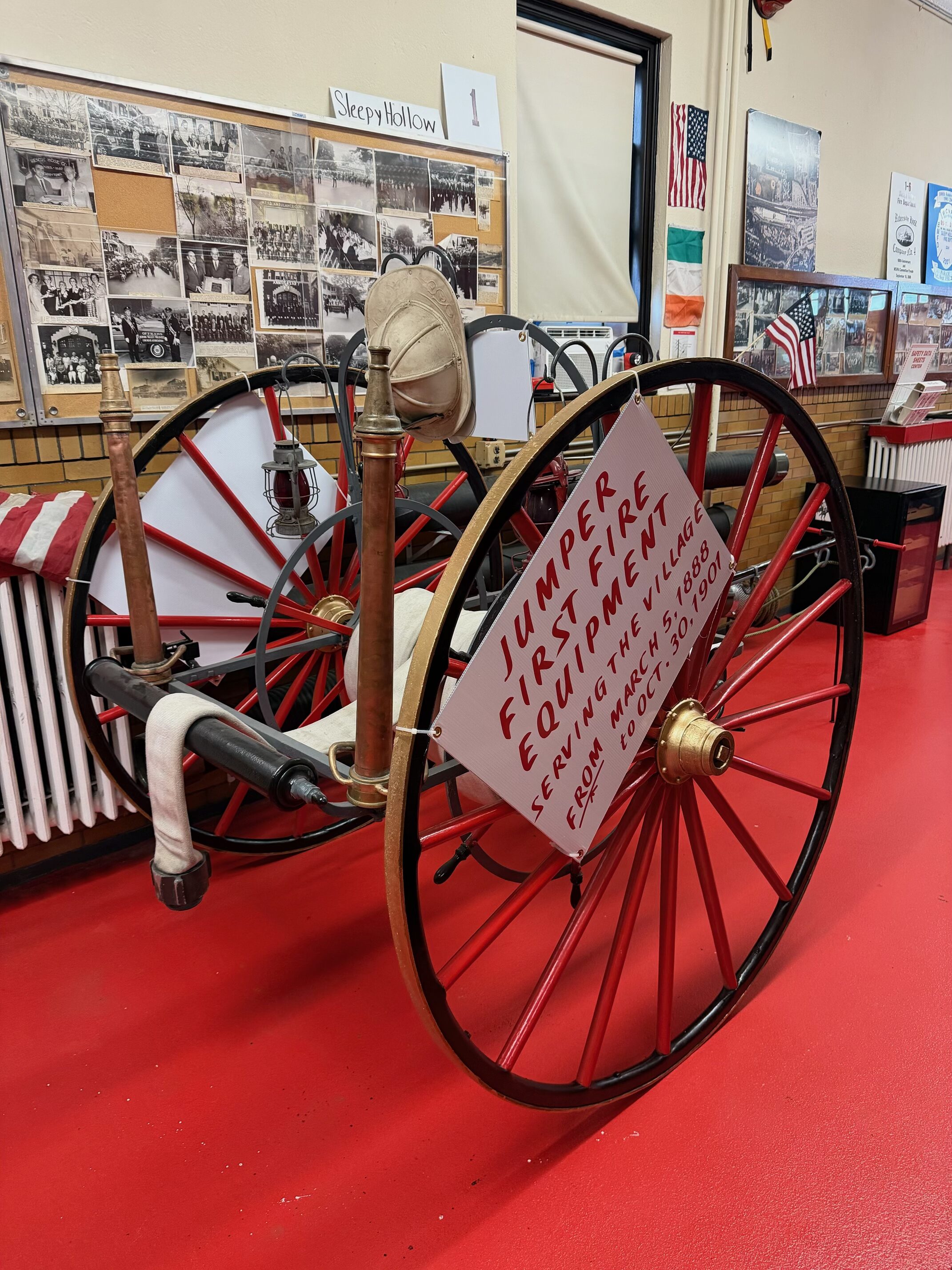
Sleepy Hollow’s Fire Fighters Celebrate Their 150th
March 29, 2026
By Tom Pedulla-- Generations of dedicated volunteers will be saluted as part of a year-long celebration of the Sleepy...
Read More

Thousands Protest Trump Policies at ‘No Kings’ Rally in Tarrytown
March 29, 2026
By Rick Pezzullo--- Armed with creative signs and posters with direct messages for President Trump, an estimated 3,000 people gathered...
Read More


Seniors: Cyber Criminals’ Most Favored Targets
March 26, 2026
By Barrett Seaman-- Barry, an attorney, while driving to work, gets a call from someone purporting to be his son....
Read More

Abinanti Looking to Return to Public Office in Mt. Pleasant
March 26, 2026
By Rick Pezzullo--- It’s safe to say being an elected public servant is in Tom Abinanti’s blood. From Greenburgh councilman...
Read More

Irvington’s BOT Team Keeps Learning On The Job
March 25, 2026
By Jeff Wilson-- The robot was sitting on blocks on a table while Irvington High School’s Bulldog Bytes, now functioning...
Read More

Congressional Candidate Peter Chatzky Says Revelation Of “Bawdy” Facebook Posts Won’t Drive Him From Race
March 24, 2026
By Barrett Seaman— Last May, Peter Chatzky, founder of the software firm NAPA Group, which provides technology and consulting for...
Read More

Antisemitic Graffiti Discovered In Irvington’s Metro North Underpass
March 23, 2026
By Barrett Seaman— On a rainy Monday morning, a commuter passing through the pedestrian tunnel beneath the tracks on the...
Read More

 Share
Share Print
Print
