





HOT AIR: Even the Strait of Hormuz is full of it
By Krista Madsen
BOOB-GATE
I had another essay ready to go for this week (about Furries, of all things, stay tuned) but then balloon-looney Boob-Gate happened and like many of you I am now hopelessly adrift on distracting inflatables.



What the heck is going on under Kristi Noem’s husband’s stretched tee-shirt? What the actual holy fake-Christian sanctimonious pet-killing cosplaying heck??
It’s the hypocrisy that gets my goat (or a dog named Cricket). I couldn’t care less what her confused sad husband is up to in his free time, but his cock-eyed kinks were hiding supposedly under the surgerized nose of the woman holding the keys to the national secrets and security, the woman who loudly condemns transgender rights and health care, marriage equality, religious liberty, LGBTQ+ programs, and—almost just minor marginalia at this point in our wobegon history—doesn’t mind when her agency assassinates an innocent lesbian right there in the face in broad peaceful daylight.
Anyhoo (huffing in my paperbag), it’s the balloons that got a rise out of many of us this week because: what a hoot! the hilarity! the hellfire and hypocrisy! and it all happens to align ever so uncannily with a timely piece I heard Friday morning on NPR about…
HELIUM
Forget oil! I don’t want to wage war in the Middle East for oil when we can more cheaply convert entire countries to sustainable energy rather than rely on these dirty fossil fuels at this point in our death circle down the earth end-drain. But helium! Did you know that the US-induced shitshow in the Strait of Hormuz is also messing with the helium industry? Did you even know there was a helium industry? I for one, decidedly did not, until I got enlightened recently by a shopkeeper who blows up balloons for a living. The Purple Ostrich down the road would love to decorate your best fest, among peddling their other “no rules” gift items. But guess what? The price of those fun foil balloons is higher these days because of the helium that goes in them. And now, maybe the whole industry is as besieged as our oil tanks.
Take a listen to this 3-minute piece of journalism in which some fun puns are of course inevitable. Strait of Hormuz closure deflates global helium supply:
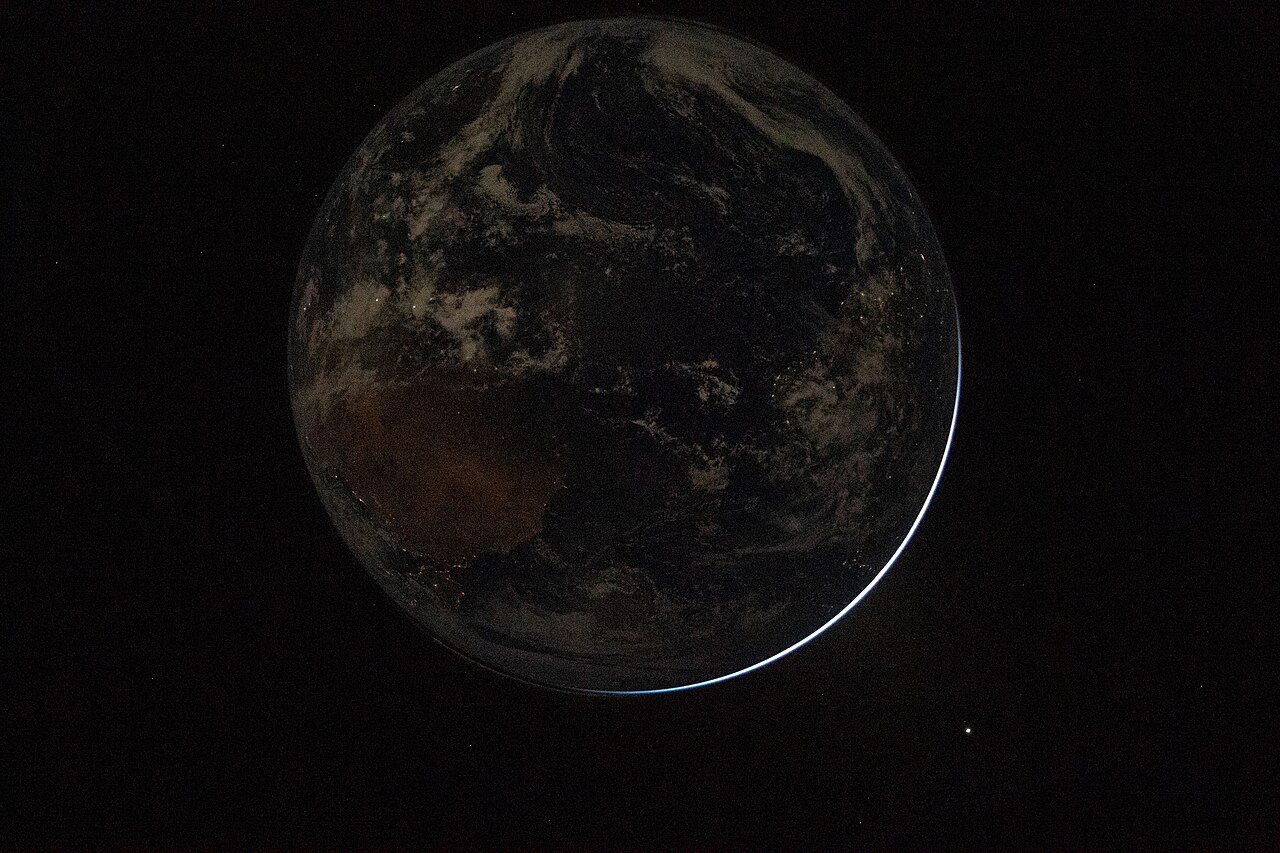
Yes, helium is essential to balloons that rise in the sky when a kid loses their grip. But also to rockets that make it back to the moon (for the first time since 1972!) like this week’s other giant newsworthy event, the April Fools launch of the Artemis II mission.
Helium is essential to the manufacture of semiconductors (affecting computers, smartphones, and our new best pal AI), and even to MRI machines. MRI scanners require “approximately 2,000 liters of liquid helium” (which puts to shame that 1/2 liter of water I drain every time I conduct a ChatGPT query).
Dr. M. Mahesh, radiology professor, is one of the talking heads of helium in this piece who tells us how a nebulous gas/liquid we never gave much thought much about, gets around:
Dr. Mahesh says it’s too early to know if what’s happening in the Strait of Hormuz is affecting medical science yet. Now, helium is a gas at room temperature, but it’s transported in liquid form. It needs to stay cold—like, negative-400-degrees-Fahrenheit cold. This is a problem for the containers holding liquid helium that have been sitting for weeks in the Strait of Hormuz. Around the six-week mark, the product will evaporate. South Korea and Taiwan are feeling the shortage the most. They’re the biggest consumers of helium from Qatar, a major producer that is no longer shipping or making it. And while the U.S. is the world’s largest exporter of helium…
BRAD BORGGARD [CFO for North American Helium in Canada]: You can’t make up for the fact that a third of world supply has been offline for a month.
The global helium market is worth an estimated $41.B. That’s big B for billions or breasts or balloons or whatever you have on your mind right now.
That’s according to the consulting company Grand View Research. And the growing demand for semiconductors is expected to increase the market value to over $6 billion by 2030. But semiconductor makers, like GlobalFoundries, don’t appear to be immediately concerned. In a statement, they said they don’t anticipate any near-term impacts but that the situation remains fluid. Scotten W. Jones, the president of Semiconductor Manufacturing Economics, says he’s concerned about the shortage. But even if this leads to a price bump, he doesn’t believe it will be put onto consumers.
Well thank goodness, says the reporter, because it’s time again for a pun:
“A kind of inflation that no consumer wants to see.”
I think I always thought helium could be conjured at home, in the same way I might concoct a volcano on a paper plate with baking soda and vinegar. But no, it is mined.
From HowStuffWorks, helium is two parts magic and one part deep-space (or deep earth) science:
Helium is abundant in space, where it’s produced as a product of the fusion reaction inside stars such as the sun. The naturally occurring helium on Earth, though, comes from a different sort of process. Deep inside the Earth, radioactive elements such as uranium and thorium decay and turn into other elements. The byproduct of these reactions are tiny fragments called a-particles, which consist of two neutrons and two protons. Those particles pick up electrons from the environment around them and turn into helium, which gradually rises up through the crust and is emitted into the atmosphere, where it keeps rising until it gets into space.
For the helium that fills our balloons, along with all that tech, we can actually link this to the oil and gas industry:
Fortunately for us, helium also gets into the natural gas that oil and gas drillers extract from the ground for use as fuel. That gives us a supply that we can use for blowing up balloons, as well as for a wide variety of other industrial processes, ranging from arc welding to MRIs to manufacturing silicon chips for computers. There has to be a certain amount of helium in the natural gas—at least 0.3 percent by volume—to justify all the trouble of separating it from natural gas.
This is done through industrial processes that filter other impurities, such as water, carbon dioxide and hydrogen sulfide from the gas. Finally, a process called cryogenic processing is used to cool the gas and remove the methane that makes up most of it, leaving behind a crude form of helium that is about 50 to 70 percent pure, with small amounts of argon, neon and hydrogen making up the rest. Then, the crude helium is purified through another cooling and filtering process that results in a form of helium that’s more than 99 percent pure.
With those questions resolved, I have some bigger ones. Do hot air balloons use helium? No, they literally heat air which makes the air inside the balloon lighter than the other cooler air outside and provides lift. Giant airships do use helium. At first I thought: oh no, Hindenberg, but luckily our modern Goodyear blimps learned a lesson from that New Jersey tragedy. Early airships used highly flammable (but more buoyant) hydrogen and we all know what happened with that. Helium, as a noble gas, doesn’t burn.
Another pressing matter to investigate: how does sucking helium change your voice? Because really that’s what I want to do right now if I come across a tank of this good gas. Answer: helium, as we know now, is lighter than air. When you swallow it you will squeak because the soundwaves under these conditions are able to travel almost three times faster. But also, as one of my good readers notes, we don’t recommend this at home because: headaches, dizziness, perhaps fainting and death.
So on that note, give a listen and hand a human-blown balloon to this voice-modulating kid who knows a lot more than any adult windbag in power these days.
 Krista Madsen is the author behind wordsmithery shop, Sleepy Hollow, inK., host of the occasional Sleepy Hollow Show & Tell series (next up May 28!) , and producer of the Edge|wise newsletter, which she is sharing regularly with The Hudson Independent readership. You can subscribe for free to see all her posts and receive them directly in your inbox.




 Share
Share Print
Print
