




GROSS NATIONAL: How semi-socialism can make you happy
By Krista Madsen
If, in a mere essay, I can bravely take on the overwhelming concept of patriarchy vis-à-vis the Epstein files, how about daring to endorse the word no one doth utter in the US, the dread s-word, shhh, Socialism.




No, don’t worry, I don’t mean that really. No one does. I mean the millennial indie band called Democratic Socialism with attractive lead singers AOC and Mamdani backed by Bernie in his mittens pounding on the drums. Mamdani has proven this flavor of democracy can win, by a landslide, at least in New York City. Could it pretty please be the path to excite, inspire and even heal a damaged and demented country in the mid-terms and beyond?
Too divisive? Too dangerous? Too lunatic fringe radical left domestic terrorist? It shouldn’t be.
Until then, I feel like someone’s ugly Cybertruck will get sucked into the world’s biggest pothole if we don’t all die of the measles first.
In addition to collecting essay topics in Iceland, Denmark, and Sweden, as random and inconsequential as pizzles, fermented fish, and cream puffs, there was the pervading observation throughout my recent cold Nordic travels of: Wow, look at how well they do absolutely everything over here. It all just…works.
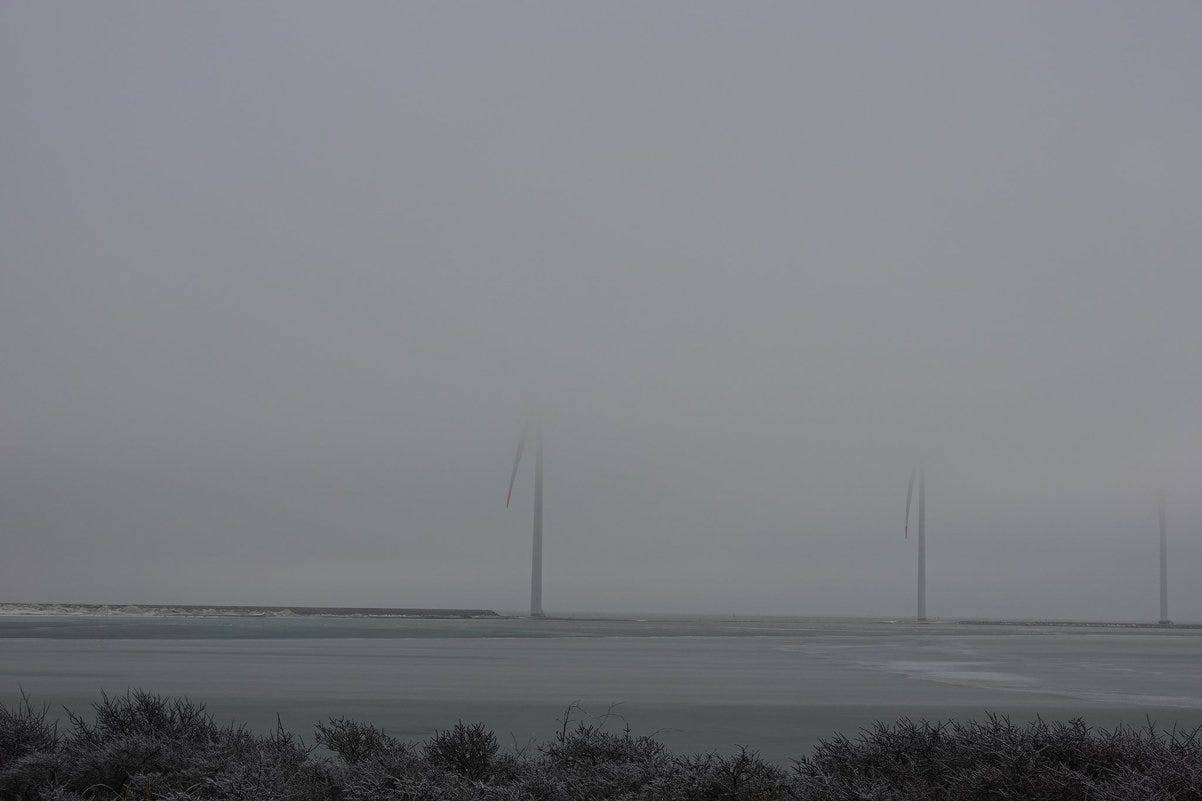
Northern Europe is ripe with architecture hundreds of years old, yet still it stands, charming and perfectly stuccoed on the outside while likely retrofitted on the inside with heat pumps and all the modern fixings. Ancient history stands proudly next to progress with the contrasting symmetry of the likes of the palatial Louvre and its glass pyramid entrance. The porous cobblestone streets don’t develop potholes and require constant Public Works repaving, they just absorb and flux between seasons. All cars, often petite and electric, dutifully stop for pedestrian crossings. Every intersection is a smooth-moving roundabout. Public buses, even the most rural, accept credit cards, so no awkward pre-ticketing required. In fact my girls were bummed we couldn’t collect coins from each country as everything operated cashless. My trip was entirely funded by touchless Apple pays. The train from downtown Copenhagen to the airport takes 15 minutes and costs about $5, complete with outlets, luggage racks, and civilized seating at tables. At the Keflavik airport in Iceland, check in was completely automated (including printing boarding passes, attaching tags to luggage, and feeding our luggage onto conveyer belt for our own scanning a la grocery store) and took 10 minutes. Every public bathroom has hand dryers built into the faucets. The toilets have the option of mini- or maxi-flush modes. Windmills as far as the eye can see.
Highly volcanic island surrounding by the Atlantic, Iceland architecture felt surprisingly contemporary compared to the continental countries, as if most old infrastructure had been wiped away by lava. I wondered how the ancient former stomping ground of Vikings could feel so new but, contrary to my eruption theory (outside the molten town of Grindavik), my research revealed that the older buildings of turf and stone proved difficult to maintain and were largely replaced outside of historical sites. Construction might look newer due to the early proliferation of industrial materials (corrugated iron came into favor in the 1860s as more enduring against the harsh elements), the simple timeless style of the Scandinavians, or the fact that many buildings burned down. Mostly imported timber was replaced by concrete in the early 1900s after a fire destroyed many buildings of capital Reykjavik.
Native trees are rare on Iceland (only covering 1% of the island!), which makes it feel like a spare moonscape like none other. It’s trending now to transport stands of evergreens from other countries to supplement the shrubby scrubby natives, but driving any distance reveals miles of lava fields. There was something romantic about the black rock with a black house on it that struck me as so serene and desert-like. Perhaps the Vikings left little impact since their homes were also pretty geo, packed underground like hobbit holes with the subtle rise from the buried mound of a grassy roof.
Icelandic infrastructure is incredible in that—along with the great credit card buses and those ever-flowing roundabouts—there is essentially free hot water to heat homes and bathe with just endlessly available underground. As tourists we got to partake of the geothermal daily in multiple ways from our showers to the luxurious spa waters to the steamy outdoor hot tubs at most places we stayed. Look up at night from the warm pool of the hotel or boarding house and the sky-crossing stripe of grey you think is a cloud suddenly morphs and swirls into green glowing Aurora that grows and dances for hours until you prune, what could be finer.
Our tour guide on the way to the frozen falls, geyser, and continental divide site-trio on the coldest day imaginable kept us warm with facts about this magic if stinky piping hot water of Iceland. It may smell like rotten eggs with its hydrogen sulfide gas but it will keep your skin so soft. It’s not exactly free to pipe this hot water (176°F) directly from the ground, but it’s incredibly cheap. And it’s connected to 90% of the properties in the country. Combined with hydropower, Iceland generates nearly its entire electricity and heating from renewable energy.
Stick around long enough and you may even got to partake of the good universal healthcare. Since our flights home were delayed (blizzard, New York), we got to enjoy a few extra days in hottest water/coldest air Iceland in which my daughter could be injured. Immediately upon checking into our Viking bungalow, my daughter got a substantial splinter lodged deep under her fingernail from all that imported timber. Which for us, as tourists, meant she gave her name, birth date to the local clinician, and we paid the equivalent of a $100 something in however many Icelandic kroners to be the first and fastest appointment with kind and efficient care.
There’s the sense throughout of what a world we might achieve when people come together to do big things. Since 2020, a regionally transformative 10-mile bridge connects Sweden to Copenhagen. We were now just this easy morning scoot via efficient train away from another country in our international excursions.
What’s the catch? Well, you know, there’s never any free lunch. (In fact lunch is quite expensive in these parts). Is it worth it? A resounding yes, say the locals, the economists, and the scientists.
According to the “Nordic Model,” for your higher tax rate you enjoy universal healthcare, free education through college, and all the benefits of systems and safety nets that not only function but work like a well-oiled Swiss watch. This isn’t capital-S socialism where the state owns the means of production but free market social democracy. Unions are strong, market freedom is often higher than in the US. And guess what? Handing a good share of your diurnal nonsense stress over to the government and not having to figure out how to hustle for health and education makes for a healthier and more educated people, which makes for a robust, more equitable economy; and a better economy makes for happier people and so on.
When we Americans complain about higher taxes, I always cite the happiness index that comes at this price. I personally would pay anything not to deal with insurance and the FAFSA.
As of 2020, all of the Nordic countries rank highly on the inequality-adjusted HDI (Human Development Index) and the Global Peace Index as well as being ranked in the top 10 on the World Happiness Report.
In the World Happiness Report, as of 2025 (using a three year average up to 2024), Finland ranks 1, Denmark 2, Iceland 3, Sweden 4, Netherlands 5… factoring in rankings of social support, GDP per capita, healthy life expectancy, freedom, generosity, perceptions of corruption.
US is ranked 24th, which by the way ranks very low on the freedom scale, something we supposedly pride ourselves on. No comment on the corruption.
Why are we supposed to believe, as a sign of our patriotism, that our failing infrastructure and low happiness (switch out with obesity, heart disease, depression, stress, etc.) are supposed to be good for us? Would you like fries with that?
Why are we unwilling to learn from these countries, our elders?

In his article in Psychology Today, “What Would Democratic Socialism Mean for America?” Benjamin Radcliff, PhD., asserts that “The ‘European Nightmare’ produces greater happiness than the ‘American Dream.’”
The more your fundamental needs are met at the basic levels, the more freedom you have to pursue higher level aspirations. Picture Maslow’s pyramid and the hierarchy of your happiness.
This takes us to approaches that stress the provision of just such human needs. The most prominent of these is what the Dutch sociologist Ruut Veenhoven of the Erasmus University in Rotterdam has labelled ‘liveability theory’, which simply suggests that people are happier in those societies that are the most liveable, in the sense of providing the highest level of human needs to the greatest number of people. In this interpretation, people are simply happier when more of their needs as human animals are met. The influential work of the late US psychologist Abraham Maslow provides a model for understanding those needs, from the more basic lower-level needs necessary to obtain the higher-order ones. Food, clothing and shelter—our physiological needs—are at the bottom of the pyramid, followed by financial security, employment, and freedom from fear or crime. These are safety and security needs. Esteem constitutes the next level—these include friendships, romantic love, and immersion in social networks. A sense of being valued by one’s community and an amount of agency, or being able to make decisions of consequence about one’s life, form the higher level needs of self-respect and self-actualisation.
Because countries who charge higher taxes deliver higher quality of life, of course this equates to more satisfied and successful citizens. So—brace yourself—paying higher taxes actually makes people happier. Which would basically just about shock anyone to death if you said this out loud in the United States. Try the phrase “welfare state” to really rub it in.
The policies most conducive to human wellbeing turn out to be essentially the same ones that Einstein himself originally suggested: those associated with social democracy. In reviewing the research in 2014, Adam Okulicz-Kozaryn, a political scientist at Rutgers University-Camden in New Jersey, found that ‘societies led by leftist or liberal governments (also referred to as welfare states)’ have the highest levels of life satisfaction, controlling for other factors. Looking across countries, the more generous and universalistic the welfare state, the greater the level of human happiness, net of other factors.
The phrase ‘welfare state’ is pejorative to many Americans, but it would be less so if they had a better understanding of what it implies to the rest of the world. In the abstract, a welfare state means a society that has created a system of protecting people against the insecurities of everyday life by socialising risk and reward. This implies not only the staples of social protection—guaranteed access to healthcare, unemployment insurance, and pensions—but benefits unknown in the United States, such as state-mandated sick days (in Germany, six weeks at full pay, and then up to 78 weeks at 70 per cent) and guaranteed vacation days (four weeks at full pay in Germany). More surprising perhaps are ‘family allowances’, or grants paid to all families with children, regardless of income—every German family receives 184 euros (or around $205) per month, per child. Minimum guaranteed earnings are also much higher in countries approaching the welfare state ideal – Denmark’s effective minimum wage is about $20 per hour. It is this sense of shared risk and shared prosperity that prompted the late Swedish Prime Minister Olof Palme to observe that: ‘With all its faults, the welfare state remains the most humane and civilised system ever created.’
It is public policies that are humane and civilised that foster the conditions which allow people to actually enjoy being alive.
 Krista Madsen is the author behind wordsmithery shop, Sleepy Hollow, inK., host of the occasional Sleepy Hollow Show & Tell series , and producer of the Edge|wise newsletter, which she is sharing regularly with The Hudson Independent readership. You can subscribe for free to see all her posts and receive them directly in your inbox.




 Share
Share Print
Print
