


EARTH CHASE: Hunting energy vampires
By Krista Madsen
Earth Month has been an amazing road trip thanks to this Rivertown Scavenger Hunt I’ve been overly consumed by for the last few weeks. I got a late start to my region’s little competition on its accompanying Goosechase app. I somehow missed the posters all over town and online. And the fact that there would be prizes ($500 and gift baskets!) for the most intrepid participants and $3,000 for their affiliating villages.



At first my kids and I grabbed the low-hanging fruit. Collect 200 points without even leaving the introvert house just by answering some questions about why is the Hudson River often brown (it’s just silt stirred up from being tidal and having weather, not the pollution, so jump in!). Then easy actions like unplugging the energy vampires in your house (and after watching What We Do in the Shadows, I find an energy vampire hilarious but not on my electric bill.) Then, the 400 tier points become 600 once you start venturing out with the further crew recruitment of a new boyfriend. (I wonder how many couples have bonded over these hunting excursions; perhaps there will be some flower crowns for us at the end). First around the block—find the pollinator garden, plant some seeds, compost—and then further afield and more verbose. Donate to the food drive in Hastings, hike in Ardsley, thrift in Irvington, speak to a shopkeeper about his cheese in Dobbs. I’ve been now, at a rapid rate, to more preserves within mere miles than I knew existed, discovered Mom’s organic market has food refilling stations, learned there’s a collapsed cave dedicated to someone named Kate in a Glenville park, and poked around the back corners of weird Public Works outposts to recycle my e-waste. Current conditions: points accrued 36,200; 68 missions achieved; 4th place!
The more I rack up points, the less I can stop. It occurs to me while I spend about an hour a day driving to various spots around the series of Rivertowns all strung along that beautifully brackish Hudson coast like pearls, that this is not an activity for the faint of gas. I am grateful as usual that I have an EV and can proudly do these journeys for free or next to nothing. What’s the carbon footprint of all the Earth scavengers scouring the village of their earthy treasures in their oil-based automobiles? Can we offer more points for the carpoolers, the trainbound, the pedestrians, the bikers, the bussers? (There are two missions to get on a bus and a bike).
This hell or highwater Age of Hormuz is a fine time for me to re-sound the original alarms for which I once started this Substack. I began here to share my off-gassing mission. An insane scavenger hunt of sorts where I ripped out perfectly good infrastructure from my house and started over with 100 percent electricity and a mad goal of reaching net zero someday—gathering an incredibly rapid boil induction stove from someone’s house on Long Island; turning my discarded gas lines into a pipe tree, as you do; installing heat pumps with a willy nilly nexus of new silver ductwork worthy of the tent camp in ET. The old fat-bottomed Tesla named Katinka became important to this equation once I realized you can find certain used models (like Model S’s predating 2016) that may be grandfathered in with free unlimited supercharging at Tesla stations for the life of the car no matter the owner, and free data to boot.) Finally, came the solar panels, essential last piece to this scenario, which I have yet to write about but when I do it will be accompanied by Lorde’s sunny “Solar Power” song.
There’s no time like now in the world’s circling of the eco-drain to jump on the off-gassing track. Eco as in both ecology and economics, as we should heed both the science and the math. This should be a mission for which you can score 100,000 points in the scavenger app, and Pass Go by not paying $4.29 (current price per gallon at my local gas pump). Instead of freaking out about Dementia Don starting an oil war in the Middle East (and making things way worse), take this as an opportunity to make the switch and begin to choose to live in a place where none of this matters.
According to many a recent study and this article on Natural History Museum, getting to net zero “is cheaper and greener than continuing the use of fossil fuels.” Net zero dreams are good for your wallet and make sound economic sense for the world.
A rapid transition to net zero could save $12 trillion in the coming decades.
With renewable technologies likely to become cheaper than fossil fuels within a decade, switching now will allow the world to have a greener and cheaper future.
Going green is no longer just the smart decision—it’s also the most profitable one.
A team of researchers from Oxford University predict that a rapid transition to green energy sources such as wind and solar power could save anywhere between $5 to $15 trillion compared to taking no action.
This forecast held true in 80% of scenarios modelled by the team and could save even more money if green technology continues to improve.
Professor Doyne Farmer, who co-authored a paper detailing the findings, says, ‘There is a pervasive misconception that switching to clean, green energy will be painful, costly and mean sacrifices for us all—but that’s just wrong.’
‘Renewable costs have been trending down for decades and are already cheaper than fossil fuels in many situations. Our research shows they will become cheaper than fossil fuels across almost all applications in the years to come and if we accelerate the transition, they will become cheaper faster.’
‘Completely replacing fossil fuels with clean energy by 2050 will save us trillions.’
And if you look at what’s playing out in the bendy Strait, opting out of fossil-fueled energy is a smart move for our safety, says a business reporter for Yahoo! Finance.
The global push to move away from oil and gas has long been framed as a response to the effects of climate change and the need to take care of the planet. But a widening group of strategists, analysts, and industry participants argue that the transition is being reshaped by a different, more immediate driver: energy security.
The disruption to global energy markets tied to the war in Iran and escalating attacks on infrastructure in the Middle East has sharpened concerns about the vulnerability of fossil fuel supply chains, prompting renewed debate about how countries can reduce reliance on imported hydrocarbons.
“One of the predictions you can make out of what’s happening is that it’s going to turbocharge the energy transition,” Jeff Currie, chief strategy officer of energy pathways at Carlyle, said at CERAWeek by S&P Global, a major energy industry conference, last week.
“The energy transition never had anything to do with climate change … Security was always paramount.”
Oh well, sigh me and Greta Thunberg who wish people would be compelled enough just by the death-of-earth part, I guess we’ll take progress in whatever form it comes in. Money and security, so be it, as long as these factors really finally motivate.
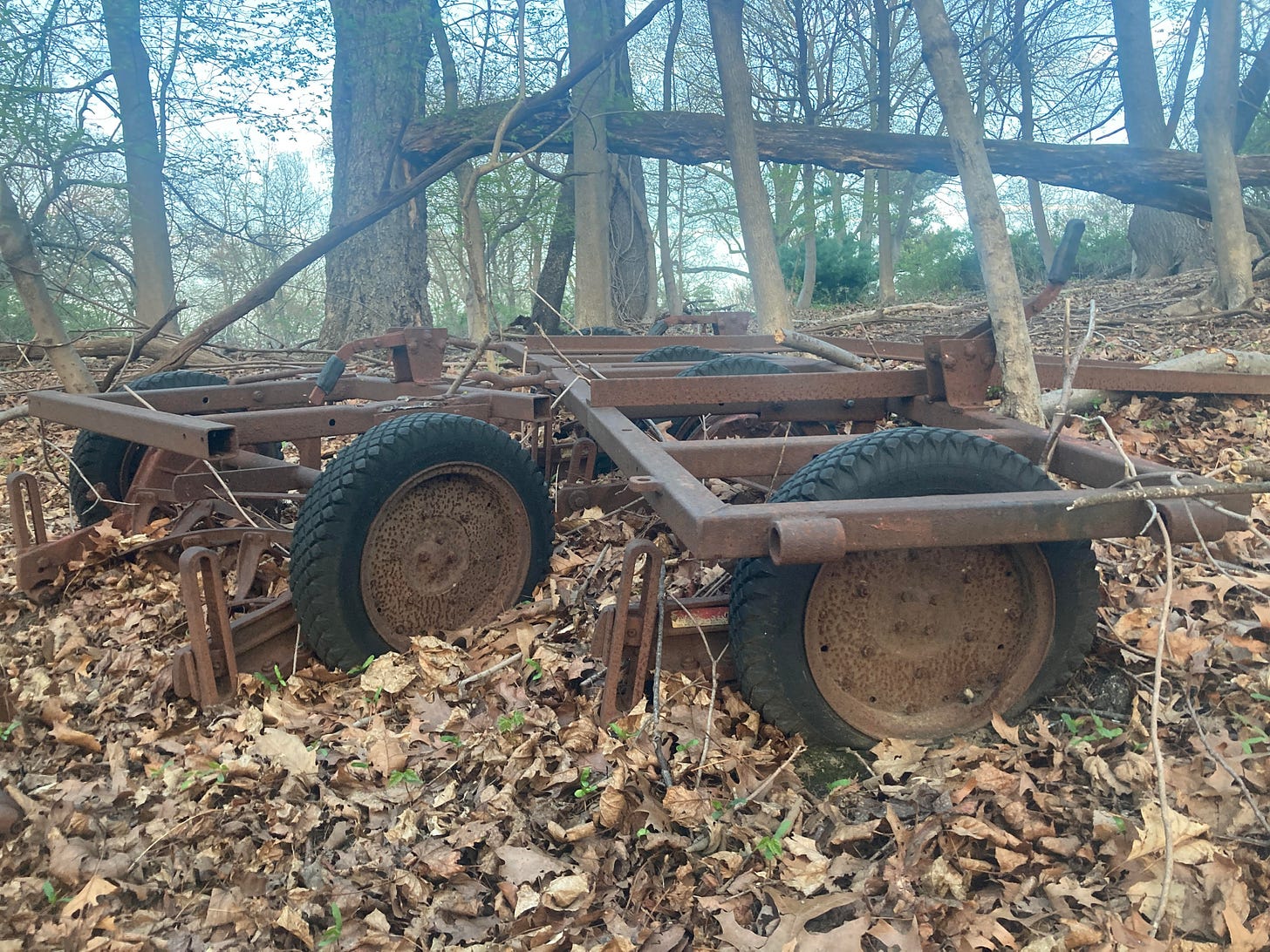
Back to the more important work of my weekend scavenging. Only days to go until this all ends on May 4. The world? No, the hunt. Mission: Save the Planet—what’s the runner up gift basket for that? Happening upon random rusty metal cart with tires and no gas tank in the bird-infused forest, 600 points.
 Krista Madsen is the author behind wordsmithery shop, Sleepy Hollow, inK., host of the occasional Sleepy Hollow Show & Tell series (next up May 28!) , and producer of the Edge|wise newsletter, which she is sharing regularly with The Hudson Independent readership. You can subscribe for free to see all her posts and receive them directly in your inbox.




 Share
Share Print
Print
